
What is the stability of a stainless steel tea kettle on the stove?
Leave a message

Hey there! As a supplier of stainless steel tea kettles, I've gotten a ton of questions about the stability of these kettles on the stove. It's a super important topic, especially when you're dealing with boiling water and a hot stove. So, let's dive right in and explore what makes a stainless steel tea kettle stable on the stove.
First off, what do we mean by "stability"? Well, in simple terms, it's how well the kettle sits on the stove without tipping over or wobbling around. A stable kettle is crucial for safety reasons. You don't want a kettle that might topple over and spill boiling water all over your stovetop or worse, onto you.
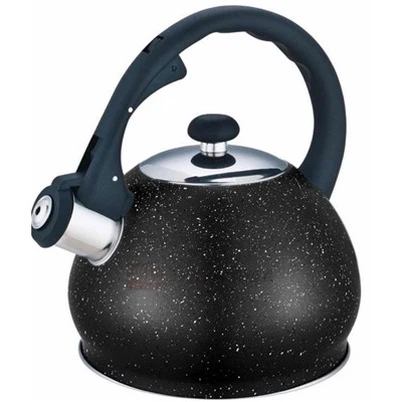
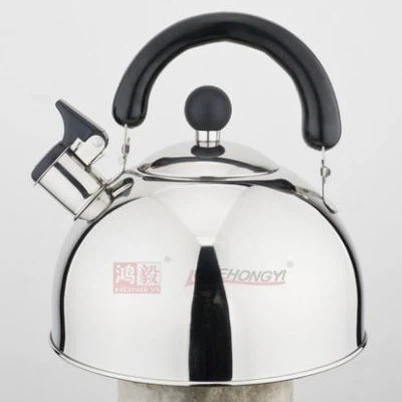
One of the key factors that affect a kettle's stability is its base. A wide and flat base provides a larger surface area in contact with the stove. This gives the kettle better balance and reduces the risk of it tipping. Our Stainless Steel Whistling Stovetop Tea Kettle is a great example. It has a solid, flat base that spreads the weight evenly across the stovetop. Whether you're using a gas, electric, or induction stove, this wide base ensures that the kettle stays put.
The material of the base also plays a big role. Stainless steel is an excellent choice because it's strong and durable. It can withstand the high temperatures of the stove without warping or deforming. When a base warps, it can cause the kettle to become unstable. Our stainless steel bases are designed to maintain their shape, no matter how long you keep the kettle on the stove.
Another aspect to consider is the weight distribution of the kettle. A well - balanced kettle will be more stable. If a kettle has a heavy spout or handle on one side, it can throw off the balance and make it more likely to tip. We've designed our kettles, like the Orange Stainless Steel Tea Kettle, to have an even weight distribution. The handle is placed in a way that doesn't cause any imbalance, and the overall design ensures that the center of gravity is in the middle of the kettle.
The shape of the kettle can also impact its stability. Kettles with a lower center of gravity are generally more stable. Our kettles are designed with a relatively low profile, which means they sit closer to the stovetop. This lowers the center of gravity and makes them less likely to tip over, even if they're bumped accidentally.
Now, let's talk about different types of stoves. Gas stoves have an open flame, and the heat is concentrated in a specific area. A stable kettle on a gas stove needs to be able to handle this concentrated heat without moving around. Our kettles are designed to fit snugly over the burner, so they don't get pushed around by the force of the flame.
Electric stoves have a flat heating surface. The stability here depends on how well the kettle's base makes contact with the surface. Our flat - based kettles make excellent contact with electric stovetops, ensuring efficient heat transfer and stability.
Induction stoves are a bit different. They use magnetic fields to heat the kettle directly. For a kettle to work on an induction stove, it needs to have a magnetic base. Our Stainless Steel Tea Kettle Induction is specifically designed for induction stoves. It has a magnetic base that not only allows it to heat up quickly but also provides good stability on the smooth induction surface.
In addition to the physical design, proper usage also affects the stability of the kettle. Make sure the stovetop is clean and level. If there are any debris or uneven surfaces, it can cause the kettle to wobble. Also, when you're filling the kettle, don't overfill it. Too much water can make the kettle top - heavy and more likely to tip.
We've put a lot of thought and research into the design of our stainless steel tea kettles to ensure maximum stability. Our team of experts tests each kettle thoroughly to make sure it meets our high standards. We understand that stability is not just about convenience; it's about safety.
If you're in the market for a high - quality, stable stainless steel tea kettle, we'd love to have a chat with you. Whether you're a retailer looking to stock our products or a consumer wanting to buy for personal use, we're here to help. Just reach out, and we can discuss your needs and how our kettles can meet them.
In conclusion, the stability of a stainless steel tea kettle on the stove is determined by several factors, including the base design, material, weight distribution, shape, and the type of stove. Our kettles are engineered to provide excellent stability in all these aspects. So, if you're tired of wobbly kettles and want a reliable option, give our products a try.


References
- General knowledge about stainless steel materials and tea kettle design
- In - house testing and research on kettle stability