
What is the heat transfer efficiency of a stainless steel kettle?
Leave a message

Hey there! As a supplier of stainless steel kettles, I often get asked about the heat transfer efficiency of these nifty kitchen gadgets. So, let's dive right in and chat about what makes stainless steel kettles tick when it comes to heating up water.
First off, what exactly is heat transfer efficiency? In simple terms, it's how well a kettle can transfer heat from the heat source (like a stovetop or an electric heating element) to the water inside. A highly efficient kettle will heat up water quickly, using less energy in the process. And that's not just good for your time; it's also great for your energy bill!
Stainless steel is a popular material for kettles, and for good reason. It's durable, resistant to rust and corrosion, and has a sleek, modern look that fits well in any kitchen. But how does it stack up in terms of heat transfer?
Well, stainless steel isn't the best conductor of heat compared to some other metals, like copper or aluminum. Copper, for example, is an excellent heat conductor. It can quickly transfer heat from the heat source to the water, heating it up in no time. Aluminum is also pretty good at conducting heat. However, stainless steel has its own set of advantages that make it a great choice for kettles, despite its relatively lower heat conductivity.
One of the main benefits of stainless steel is its durability. It can withstand high temperatures without warping or degrading, which means your kettle will last a long time. And while it may not heat up as quickly as a copper or aluminum kettle, modern stainless steel kettles are designed with features to improve their heat transfer efficiency.
For instance, many stainless steel kettles have a multi - layer bottom. This bottom typically consists of an aluminum or copper core sandwiched between layers of stainless steel. The aluminum or copper core acts as a great heat conductor, quickly absorbing heat from the stovetop and transferring it to the water. The outer layers of stainless steel provide the durability and corrosion resistance that we love.
Another factor that affects the heat transfer efficiency of a stainless steel kettle is its design. Kettles with a wider base have a larger surface area in contact with the heat source. This allows for more heat to be transferred to the water, resulting in faster heating times. Additionally, kettles with a well - insulated body can help to retain heat, reducing heat loss and improving overall efficiency.
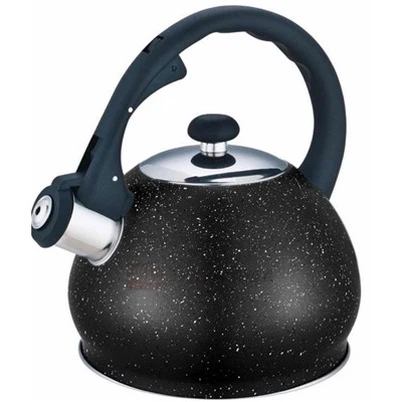
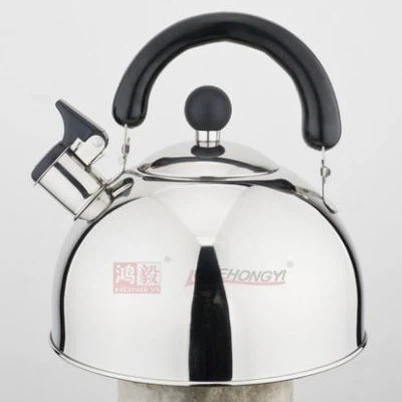
Now, let's talk about some of the different types of stainless steel kettles available on the market. You've got your Best Stainless Tea Kettle. These are often designed with a spout and handle that make it easy to pour hot water for tea. They're usually made to be aesthetically pleasing, with a sleek design that looks great on your stovetop.
Then there are Stainless Steel Kettle Whistles. These kettles are equipped with a whistle that lets you know when the water has reached boiling point. It's a handy feature, especially if you're busy doing other things in the kitchen and don't want to keep an eye on the kettle all the time.
And if you're into pour - over coffee, you might be interested in a Stainless Steel Pour Over Kettle. These kettles are designed with a long, narrow spout that allows for precise pouring, which is essential for making a great pour - over coffee.
When it comes to measuring the heat transfer efficiency of a stainless steel kettle, there are a few key metrics to consider. One of the most important is the time it takes to heat up a specific amount of water. For example, you might measure how long it takes to heat up one liter of water from room temperature to boiling point. A more efficient kettle will do this in a shorter amount of time.
Another metric is the energy consumption. You can measure how much electricity or gas is used to heat up the water. A kettle with high heat transfer efficiency will use less energy to achieve the same result, which is better for the environment and your wallet.
To test the heat transfer efficiency of a stainless steel kettle, you can conduct a simple experiment at home. Fill the kettle with a known amount of water at a specific temperature. Then, heat the kettle on a stovetop or using an electric heating element and time how long it takes for the water to reach boiling point. You can also measure the energy consumption if you have the right equipment.
Of course, there are other factors that can affect the results of your experiment. The type of heat source you use can make a difference. For example, an induction stovetop transfers heat very efficiently, while a gas stovetop may have a bit more variability. The ambient temperature in your kitchen can also play a role. If it's very cold, the kettle may take longer to heat up the water.
So, in conclusion, while stainless steel may not be the most efficient heat conductor on its own, modern stainless steel kettles are designed to overcome this limitation. With features like multi - layer bottoms, wide bases, and good insulation, they can heat up water relatively quickly and efficiently. Whether you're looking for a tea kettle, a whistling kettle, or a pour - over kettle, there's a stainless steel option out there for you.
If you're in the market for a high - quality stainless steel kettle, I'd love to chat with you. We've got a wide range of kettles that are designed with heat transfer efficiency in mind. Whether you're a home cook, a coffee enthusiast, or a tea lover, we've got the perfect kettle for your needs. So, don't hesitate to reach out and start a conversation about your kettle requirements. We're here to help you find the best solution for your kitchen.
References


- "Materials Science and Engineering: An Introduction" by William D. Callister Jr. and David G. Rethwisch
- Various product manuals and specifications from stainless steel kettle manufacturers