
What is the average boiling time of a metal lined kettle?
Leave a message

As a supplier of metal lined kettles, I often get asked about the average boiling time of these kettles. It's a crucial question for consumers, as the boiling time can significantly impact their daily tea - making or coffee - brewing routines. In this blog, I'll delve into the factors that influence the boiling time of metal lined kettles and provide an estimate of the average boiling time.
Factors Affecting Boiling Time
1. Kettle Material
The material of the metal lining plays a vital role in determining the boiling time. Metals have different thermal conductivities, which is the ability to transfer heat. For example, copper is an excellent conductor of heat. Kettles with a copper lining can transfer heat from the heat source to the water inside very efficiently. This means that water in a copper - lined kettle will heat up faster compared to a kettle lined with a metal that has lower thermal conductivity, such as stainless steel. Stainless steel is a common choice for kettle linings due to its durability and resistance to corrosion, but it doesn't conduct heat as well as copper.
2. Kettle Design
The design of the kettle also affects the boiling time. A well - designed kettle will have a shape that maximizes the contact area between the heating element (or the heat source) and the water. For instance, kettles with a wider base allow more surface area of the water to be in direct contact with the heat, facilitating faster heat transfer. Additionally, the presence of internal fins or ridges in the kettle can enhance the convection currents within the water, helping it to heat up more evenly and quickly.
3. Water Volume
The amount of water in the kettle is a straightforward yet significant factor. Naturally, a larger volume of water will take longer to boil than a smaller volume. If you're only making a single cup of tea, filling the kettle with just the right amount of water will save you time and energy. On the other hand, if you're preparing tea for a group of people, you'll need to fill the kettle with more water, and the boiling time will increase accordingly.
4. Heat Source
The type of heat source you use also has an impact on the boiling time. Gas stoves generally provide a high - intensity, direct heat source. The flame can be adjusted to a high setting, allowing for rapid heating of the kettle. Electric stoves, on the other hand, may take a bit longer to heat up the kettle, especially if they have a lower wattage. Induction cooktops are known for their efficiency. They heat the kettle directly through electromagnetic induction, which can result in a relatively short boiling time.
Average Boiling Time Estimates
Based on my experience as a metal lined kettle supplier, here are some average boiling time estimates under different conditions:
Small Volume of Water (1 - 2 cups)
- Copper - lined kettle on a gas stove: With a high - flame setting, it can take around 2 - 3 minutes to bring 1 - 2 cups of water to a boil. The excellent thermal conductivity of copper allows the heat to transfer quickly to the water.
- Stainless - steel lined kettle on an electric stove: It may take approximately 3 - 4 minutes. The lower thermal conductivity of stainless steel, combined with the relatively slower heating of an electric stove, results in a slightly longer boiling time.
- Induction cooktop with a well - designed metal lined kettle: This can bring 1 - 2 cups of water to a boil in about 2 - 3 minutes as well, thanks to the efficient heating mechanism of induction cooktops.
Medium Volume of Water (3 - 4 cups)
- Copper - lined kettle on a gas stove: Around 4 - 5 minutes. As the volume of water increases, the boiling time also goes up, but the copper lining still helps in relatively fast heat transfer.
- Stainless - steel lined kettle on an electric stove: It could take 5 - 6 minutes. The combination of more water and the slower heat - conducting stainless steel lining leads to a longer boiling time.
- Induction cooktop: Approximately 4 - 5 minutes, as induction cooktops can handle medium volumes of water efficiently.
Large Volume of Water (5 - 6 cups)
- Copper - lined kettle on a gas stove: It might take 6 - 7 minutes. Even with the efficient copper lining, the large volume of water requires more time to reach the boiling point.
- Stainless - steel lined kettle on an electric stove: This can take 7 - 8 minutes or more. The slow heat transfer of stainless steel and the large amount of water contribute to a longer boiling process.
- Induction cooktop: Around 6 - 7 minutes, maintaining its efficiency even with a larger volume of water.
Our Metal Lined Kettles
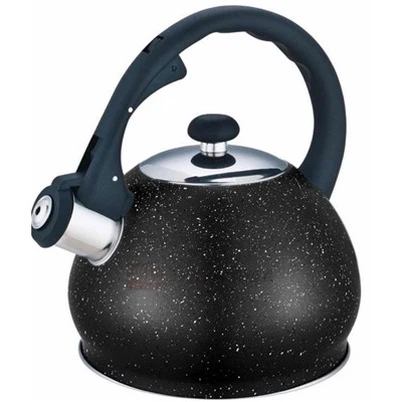
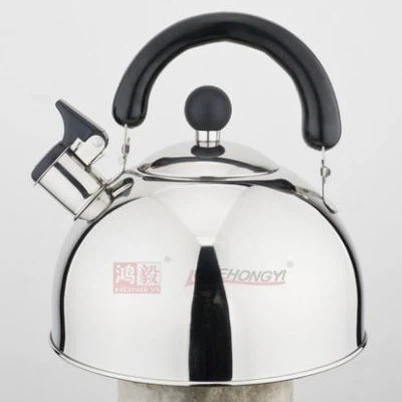
At our company, we offer a wide range of metal lined kettles that are designed to optimize boiling time. Our Tea Kettle Metal kettles are crafted with high - quality metals to ensure efficient heat transfer. We have kettles with different metal linings, including copper and stainless steel, to meet the diverse needs of our customers.
One of our popular products is the Metallic Red Kettle. This kettle not only has an eye - catching design but also features a well - engineered metal lining that helps in fast and even heating. It's suitable for both gas stoves and induction cooktops, providing versatility to our customers.

Our Tea Kettle Metal collection also includes kettles with innovative designs. These kettles have been tested to ensure that they offer a reasonable boiling time, regardless of the heat source or the volume of water used.
Conclusion
In conclusion, the average boiling time of a metal lined kettle depends on multiple factors such as the kettle material, design, water volume, and heat source. By understanding these factors, consumers can make an informed decision when choosing a kettle. At our company, we are committed to providing high - quality metal lined kettles that offer efficient boiling performance.
If you're interested in purchasing our metal lined kettles or have any questions about their boiling time or other features, we encourage you to reach out to us for a procurement discussion. We're here to help you find the perfect kettle for your needs.
References
- "Thermal Conductivity of Metals" - Physics Handbook
- "Kettle Design and Heat Transfer" - Journal of Kitchen Appliance Engineering