
Are metal tea kettles noisy when boiling water?
Leave a message

Are metal tea kettles noisy when boiling water? This is a question that many tea enthusiasts and consumers often ask. As a supplier of Tea Kettle Metal, I've had the opportunity to delve deep into this topic and understand the factors that contribute to the noise levels of metal tea kettles during the boiling process.
The Science Behind the Noise
To understand why metal tea kettles can be noisy when boiling water, we need to look at the basic principles of heat transfer and the behavior of water as it changes from a liquid to a gas. When you heat water in a metal tea kettle, the heat from the stove is transferred to the bottom of the kettle. The metal, being a good conductor of heat, quickly transfers this energy to the water molecules in contact with it.
As the water near the bottom of the kettle heats up, it begins to form small bubbles of water vapor. These bubbles rise to the surface, but as they do, they encounter cooler water above. The vapor inside the bubbles condenses, causing the bubbles to collapse. This rapid collapse of bubbles creates a series of small shock waves in the water, which we perceive as noise. This phenomenon is known as cavitation.
As the water continues to heat, more and more bubbles form, and the noise level increases. Eventually, when the water reaches its boiling point (100°C or 212°F at sea level), the bubbles no longer collapse but instead rise to the surface and burst, creating a more continuous and louder sound.
Factors Affecting Noise Levels
Not all metal tea kettles are equally noisy when boiling water. Several factors can influence the noise levels, including the type of metal, the design of the kettle, and the quality of its construction.
Type of Metal
Different metals have different thermal conductivity properties, which can affect how quickly the water heats up and how the bubbles form. For example, copper is an excellent conductor of heat, so a copper tea kettle may heat the water more quickly than a stainless - steel kettle. This rapid heating can lead to a more intense and potentially louder boiling process.
Stainless steel, on the other hand, has a lower thermal conductivity than copper. It takes a bit longer to heat the water, and the formation of bubbles may be more gradual, resulting in a relatively quieter boiling process. However, stainless - steel kettles can still be noisy, especially if they are thin - walled.


Design of the Kettle
The shape and design of the tea kettle can also play a role in the noise levels. Kettles with a narrow spout or a whistle mechanism are often louder when boiling water. The narrow spout restricts the flow of steam, causing it to build up pressure inside the kettle. When the steam finally escapes through the spout or whistle, it creates a high - pitched sound.
Kettles with a wider spout or no whistle may be quieter because the steam can escape more freely, reducing the pressure build - up inside the kettle.
Quality of Construction
The quality of the kettle's construction can also affect its noise levels. A well - made kettle with thick walls and a smooth interior surface is likely to be quieter than a poorly made kettle with thin walls and a rough interior. Thick walls can help to dampen the sound of the boiling water, while a smooth interior surface allows the bubbles to form and rise more evenly, reducing the intensity of the cavitation noise.
Our Metal Tea Kettles
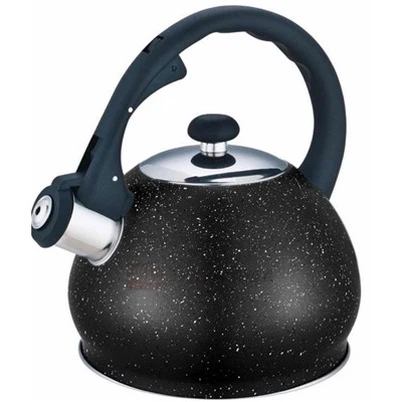
At our company, we offer a wide range of All Metal Tea Kettle options, each designed with the consumer's needs in mind. We understand that some people prefer a quiet boiling experience, while others enjoy the traditional sound of a whistling kettle.
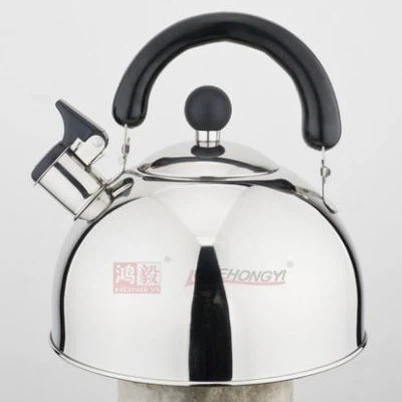
Our stainless - steel tea kettles are known for their durability and relatively quiet operation. They are made from high - quality stainless steel with thick walls, which helps to dampen the noise of the boiling water. The smooth interior surface of our kettles ensures that the bubbles form and rise evenly, reducing the cavitation noise.
For those who enjoy the classic sound of a whistling kettle, we offer a Metallic Red Kettle with a built - in whistle mechanism. This kettle is designed to produce a clear and loud whistle when the water reaches boiling point, alerting you that your tea is ready.
Addressing Concerns
If you're concerned about the noise levels of metal tea kettles, there are a few things you can do to reduce the noise. First, make sure you're using the right amount of water. Overfilling the kettle can cause the water to boil over and create more noise. Second, place a heat diffuser between the kettle and the stove. A heat diffuser helps to distribute the heat more evenly, reducing the intensity of the boiling process and the noise levels.
Conclusion
In conclusion, metal tea kettles can be noisy when boiling water, but the noise levels can vary depending on several factors, including the type of metal, the design of the kettle, and the quality of its construction. As a supplier of Tea Kettle Metal, we are committed to providing our customers with high - quality tea kettles that meet their needs, whether they prefer a quiet boiling experience or the traditional sound of a whistling kettle.
If you're interested in purchasing our metal tea kettles or would like to learn more about our products, we invite you to contact us for a procurement discussion. We look forward to working with you to find the perfect tea kettle for your needs.
References
- Incropera, F. P., & DeWitt, D. P. (2002). Fundamentals of Heat and Mass Transfer. Wiley.
- Vogel, C. (2010). The Science of Boiling Water. Physics Today.