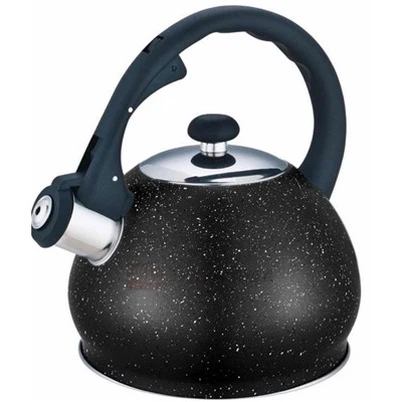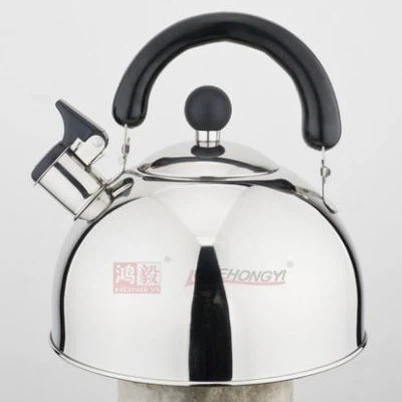

Can I use a metal tea kettle on an induction stove?
Leave a message

As a supplier of high - quality tea kettle metals, I often receive inquiries from customers about the compatibility of metal tea kettles with induction stoves. This is a crucial question for many tea enthusiasts who have invested in induction stoves for their energy - efficiency and precise temperature control. In this blog, I'll delve into the science behind using metal tea kettles on induction stoves, explore the types of metals suitable for such use, and highlight some of our top - selling products.
How Induction Stoves Work
Before we can determine if a metal tea kettle can be used on an induction stove, it's essential to understand how induction stoves operate. Unlike traditional gas or electric stoves that heat the cooking vessel through direct contact or radiation, induction stoves use electromagnetic fields to generate heat directly within the cooking pot or kettle.
An induction stove consists of a coil of copper wire beneath a ceramic glass surface. When an alternating current passes through the coil, it creates an oscillating magnetic field. If a ferromagnetic metal (a metal that can be magnetized) is placed on the stove, the magnetic field induces an electric current (eddy current) in the metal. These eddy currents encounter resistance within the metal, and according to the Joule heating effect ( $P = I^{2}R$, where $P$ is power, $I$ is current, and $R$ is resistance), this resistance converts the electrical energy into heat energy. As a result, the kettle itself becomes the heat source, heating the water inside it.
Metals Suitable for Induction Stoves
Not all metals are suitable for use on induction stoves. For a metal tea kettle to work on an induction stove, it must be made of a ferromagnetic material. The most common ferromagnetic metals used in tea kettles are:
-
Cast Iron: Cast iron is an excellent choice for induction stoves. It has high magnetic permeability, which means it can easily be magnetized by the induction stove's magnetic field. Cast iron tea kettles heat up evenly and retain heat well, making them ideal for brewing tea. However, they can be heavy and may require some maintenance to prevent rusting.
-
Stainless Steel (Magnetic Grades): Some stainless steel alloys are ferromagnetic. These are typically the 400 - series stainless steels, such as 430 stainless steel. They contain a significant amount of iron, which allows them to interact with the magnetic field of the induction stove. Our Brushed Metal Kettle is made from high - quality magnetic stainless steel. It has a sleek brushed finish that not only looks great but also resists fingerprints and scratches.
-
Enamel - Coated Steel: Enamel - coated steel kettles are also suitable for induction stoves. The steel base provides the ferromagnetic property needed for induction heating, while the enamel coating protects the steel from corrosion and gives the kettle an attractive appearance.
Metals That Don't Work on Induction Stoves
Some metals do not work on induction stoves because they are not ferromagnetic. These include:


-
Aluminum: Aluminum is a non - ferromagnetic metal. It does not interact with the magnetic field of an induction stove, so an aluminum tea kettle will not heat up on an induction stove.
-
Copper: Similar to aluminum, copper is non - ferromagnetic. Although copper is an excellent conductor of heat, it cannot be heated directly by an induction stove's magnetic field.
Testing Your Metal Tea Kettle for Induction Compatibility
If you're unsure whether your metal tea kettle is suitable for an induction stove, you can perform a simple test. Take a magnet and place it on the bottom of the kettle. If the magnet sticks firmly, the kettle is likely made of a ferromagnetic material and will work on an induction stove. If the magnet does not stick or only adheres weakly, the kettle may not be compatible.
Advantages of Using Metal Tea Kettles on Induction Stoves
There are several benefits to using metal tea kettles on induction stoves:
-
Energy Efficiency: Induction stoves transfer heat directly to the kettle, minimizing heat loss. This means that less energy is wasted, and you can heat your water more quickly and with less energy consumption compared to traditional stoves.
-
Precise Temperature Control: Induction stoves allow for precise temperature adjustments. This is crucial for brewing different types of tea, as each type of tea requires a specific water temperature for optimal flavor extraction. For example, green tea is best brewed at around 80 - 85°C, while black tea requires water at around 95 - 100°C.
-
Safety: Induction stoves only heat the kettle and not the surrounding surface. This reduces the risk of burns from accidentally touching the hot stove, and it also means that spills are less likely to cause a fire.
Our Range of Induction - Compatible Metal Tea Kettles
As a tea kettle metal supplier, we offer a wide range of induction - compatible metal tea kettles to meet the diverse needs of our customers.
Our Small Metal Kettle is perfect for individuals or small households. It has a compact design that takes up minimal space on the induction stove, yet it can still hold enough water for a single cup of tea.
For those who prefer to have a built - in filter for loose - leaf tea, our Kettle with Metal Filter is an excellent choice. The metal filter ensures that you can enjoy a smooth cup of tea without any loose leaves.
Conclusion
In conclusion, it is entirely possible to use a metal tea kettle on an induction stove, as long as the kettle is made of a ferromagnetic material such as cast iron, magnetic stainless steel, or enamel - coated steel. Induction stoves offer numerous advantages, including energy efficiency, precise temperature control, and safety.
If you're in the market for a high - quality metal tea kettle that is compatible with induction stoves, look no further. We are committed to providing our customers with the best products and services. Whether you're a casual tea drinker or a serious tea connoisseur, our range of tea kettles is sure to meet your needs.
If you have any questions about our products or would like to discuss a potential purchase, please feel free to reach out. We're always happy to assist you in finding the perfect tea kettle for your induction stove.
References
- "Principles of Induction Heating" by ASM International.
- "Materials Science and Engineering: An Introduction" by William D. Callister Jr. and David G. Rethwisch.