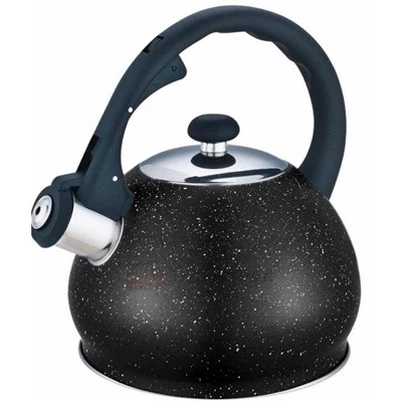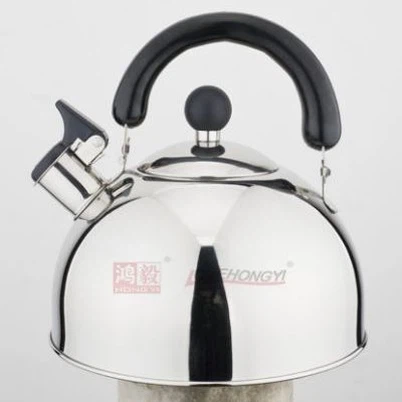

What is the heat - up time of an all - metal tea kettle?
Leave a message

Hey there, tea lovers! As a supplier of all - metal tea kettles, I often get asked about the heat - up time of these awesome kettles. So, let's dig deep into this topic and figure out what affects the heat - up time of an all - metal tea kettle.
First off, let's understand the basics. An all - metal tea kettle is made entirely of metal, which is a great conductor of heat. Metals like stainless steel, copper, and aluminum are commonly used. Each metal has its own thermal conductivity properties, and this plays a huge role in how quickly the kettle heats up.
Stainless steel is a popular choice for all - metal tea kettles. It's durable, resistant to rust, and has a nice look. However, its thermal conductivity isn't as high as some other metals. Stainless steel has a thermal conductivity of around 16 - 24 W/(m·K). This means that it takes a bit longer to heat up compared to metals like copper or aluminum.
Copper, on the other hand, is an excellent conductor of heat. It has a thermal conductivity of about 385 - 401 W/(m·K). This high thermal conductivity allows copper kettles to heat up really fast. But copper can react with acidic substances in tea, so many copper kettles are lined with a different metal to prevent this. You can check out our Metal Lined Kettle for a great option that combines the heat - conducting properties of copper with the protection of a lining.
Aluminum is another metal used in tea kettles. It has a thermal conductivity of around 205 W/(m·K), which is better than stainless steel but not as good as copper. Aluminum kettles are lightweight and relatively inexpensive, making them a popular choice for many tea enthusiasts.
Now, let's talk about the size of the kettle. A Small Metal Kettle will heat up faster than a larger one. This is because there's less water to heat. The amount of energy required to heat water is proportional to its mass. So, if you have a small kettle with a half - liter of water, it will heat up quicker than a large kettle with two liters of water.
The power source also affects the heat - up time. If you're using a stovetop burner, the heat output of the burner matters. A high - powered burner will transfer more heat to the kettle in a shorter amount of time, resulting in a faster heat - up. Electric kettles, on the other hand, have a specific wattage. The higher the wattage, the faster the water will boil. For example, a 1500 - watt electric kettle will heat up water faster than a 1000 - watt one.
The initial temperature of the water is another factor. If you start with cold water from the tap, it will take longer to heat up compared to using pre - warmed water. In colder climates, the water from the tap might be much colder, so it will take extra time to reach boiling point.
Let's do some rough estimations. If you have a small, aluminum stovetop kettle with a half - liter of cold water on a medium - high burner, it might take around 3 - 5 minutes to reach boiling point. A larger stainless steel kettle with two liters of water could take 10 - 15 minutes on the same burner.
If you're using an electric kettle, a 1500 - watt kettle with a liter of cold water might take around 4 - 6 minutes to boil. But these are just ballpark figures, and the actual time can vary based on the factors we've discussed.


The design of the kettle also plays a role. Kettles with a wider base have a larger surface area in contact with the heat source. This allows for more efficient heat transfer, which can reduce the heat - up time. Some kettles also have special features like heat - diffusing bottoms that help distribute the heat evenly, preventing hot spots and potentially speeding up the boiling process.
Another aspect is the lid of the kettle. A well - fitting lid can help trap the heat inside the kettle. This reduces heat loss to the environment and can shave off a few minutes from the heat - up time. So, make sure your kettle has a tight - fitting lid.
Now, let's talk about the aesthetic side. We have a beautiful Metallic Red Kettle that not only looks great but also performs well. The color doesn't directly affect the heat - up time, but it sure adds a touch of style to your tea - making routine.
In conclusion, the heat - up time of an all - metal tea kettle depends on several factors, including the type of metal, the size of the kettle, the power source, the initial water temperature, the design, and the lid. By understanding these factors, you can choose the right kettle for your needs and enjoy a perfect cup of tea in no time.
If you're interested in purchasing an all - metal tea kettle for your home or business, we're here to help. Whether you're a casual tea drinker or a professional tea connoisseur, we have a wide range of options to suit your preferences. Contact us to start a discussion about your requirements, and let's find the perfect kettle for you!
References
- Incropera, F. P., & DeWitt, D. P. (2002). Fundamentals of Heat and Mass Transfer. John Wiley & Sons.
- ASM Handbook Committee. (1993). ASM Handbook Volume 2: Properties and Selection: Nonferrous Alloys and Special - Purpose Materials. ASM International.